

Motorized Shades · The Fabric Guide
What the weave decides
A field guide to shade fabrics — openness, color, UV and the constructions — from the team that specifies them room by room across South Florida.
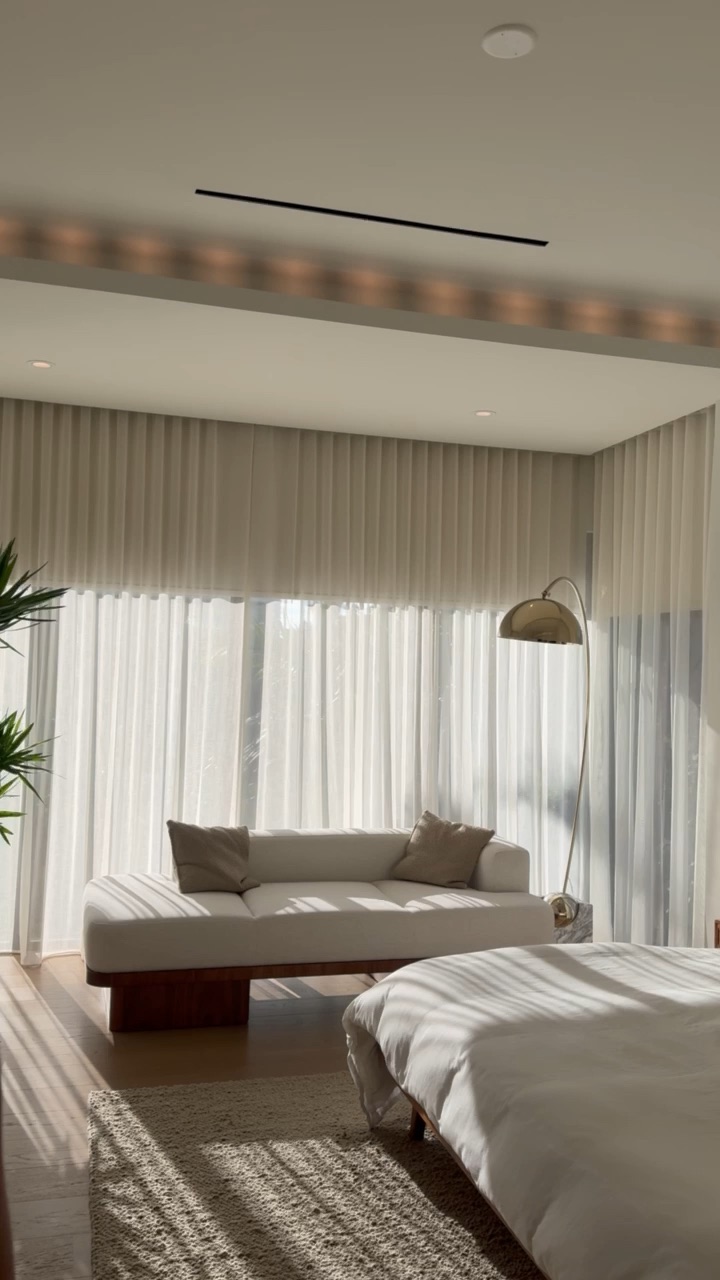
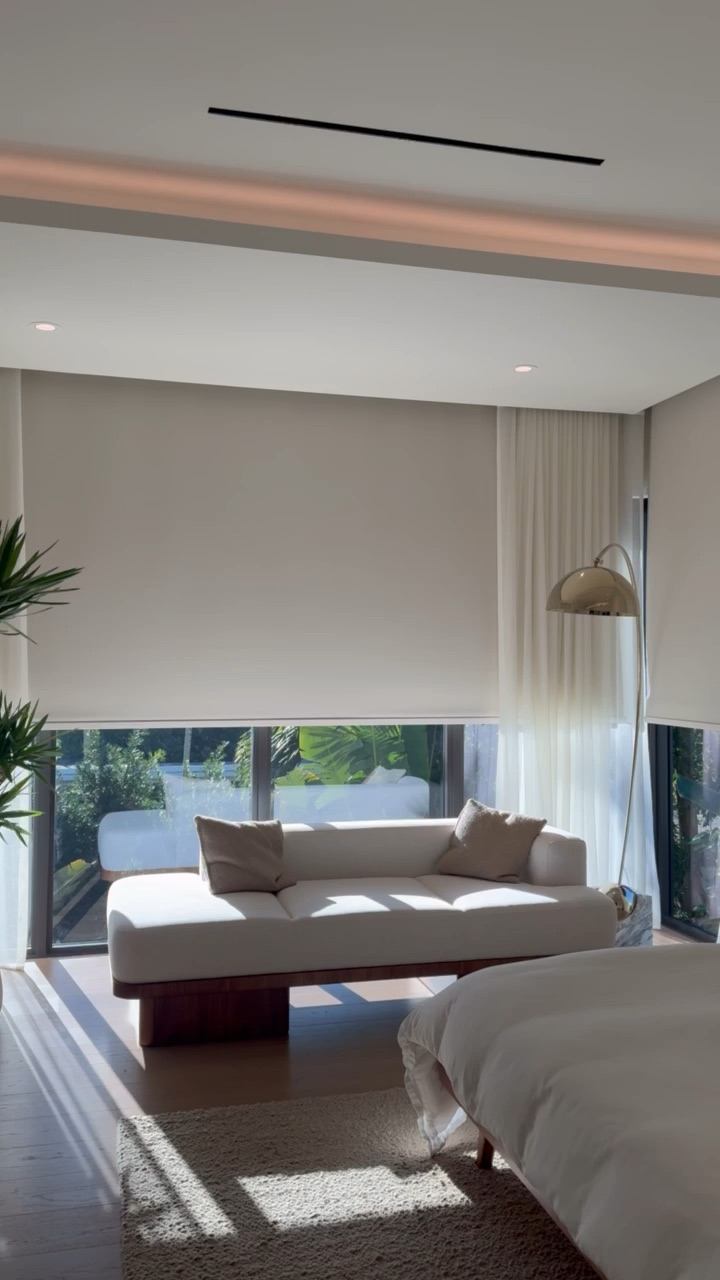
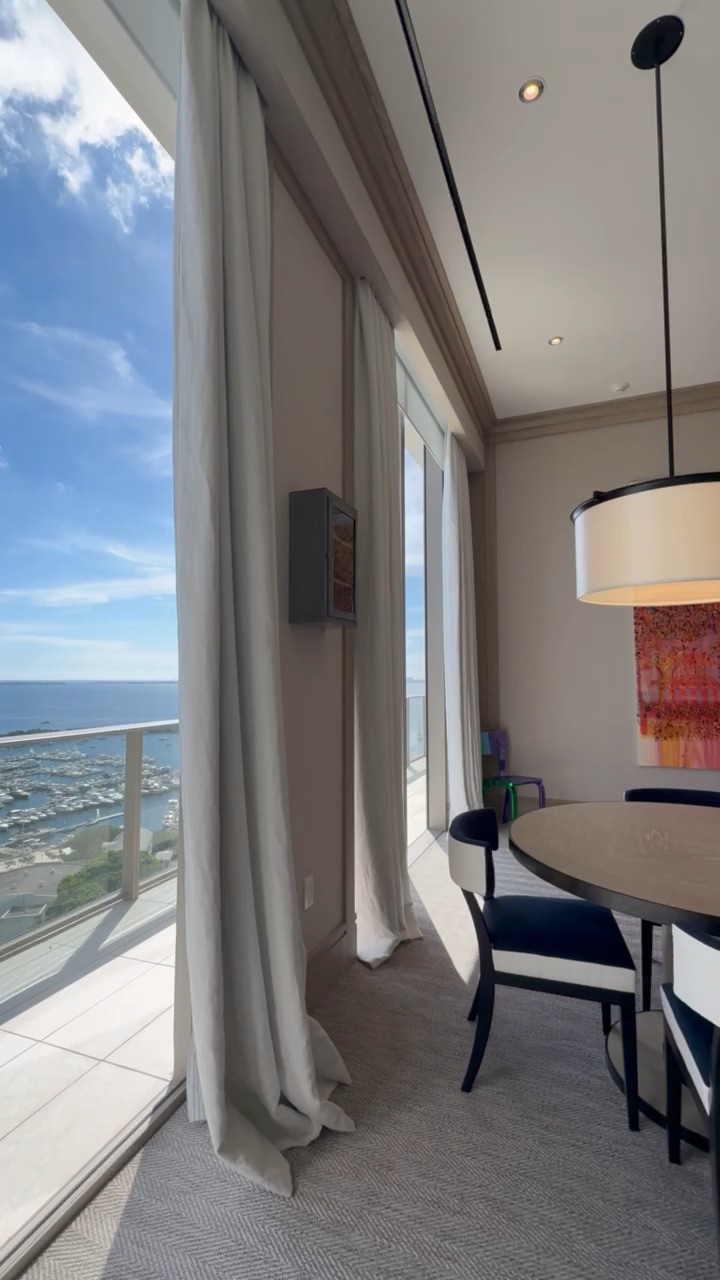
The openness factor
Every screen fabric is described by one number: the share of its weave left open. That single figure sets the terms of the trade: how much view you keep, how much glare you tame, how much privacy you gain. No single number is best. The right one changes with the exposure, the room and how you live in it.
| Fabric | View through | Glare control | Daytime privacy | Where it belongs |
|---|---|---|---|---|
| Blackout | None | Total | Total | Bedrooms, cinema |
| 1% screen | Soft | Excellent | Excellent | Harsh western glass, offices |
| 3% screen | Good | Very good | Very good | The all-rounder |
| 5% screen | Very good | Good | Good | Living rooms with a view |
| 10% screen | Clearest | Moderate | Light | View-first rooms, covered terraces |
Privacy runs on a clock
Screen fabrics obey the light. By day, the bright side is outside: you see the water clearly, and anyone passing sees almost nothing of the room. After sunset the equation flips: the lit side is now yours, and a screen fabric that guarded the afternoon will show silhouettes to the street. Nothing is wrong with the shade; that is simply how open weaves behave.
The answer is to plan for both halves of the day. In rooms lived in after dark — bedrooms above all — we specify dim-out or blackout fabrics, or a dual shade: a screen and a blackout sharing one window, each called when it earns its place. One scene for the afternoon view, another for the evening, and the fabric changes with them.
Color, light and heat
Fabric color is not a purely aesthetic decision. Darker fabrics read clearer to the eye: the weave visually recedes, the view sharpens, and glare settles down, which is why dark screens rule rooms that look at water. Lighter fabrics reflect more of the sun’s heat and diffuse daylight into a soft, even brightness, kinder to cooling loads on big western glass and gentler as a backdrop for pale interiors.
And whatever the color, performance fabrics intercept most of the ultraviolet that fades what you own. Art, rugs, veneers and upholstery take their damage silently, hours a day, every day. A shade that tracks the sun protects them without ever closing off the room. In South Florida, with this much glass and this much sun, that protection is half the reason to automate.
The constructions
FIVE WAYS TO DRESS GLASSSheers
Soften and diffuse without hiding the room: the romance layer, often paired over a working shade.
Solar Screens
The measured weave: view, glare control and UV protection balanced by openness factor.
Dim-Out
Blocks light through the fabric itself; a soft glow survives at the window’s edges.
Blackout
Fully opaque — and with recessed side channels, truly dark. The standard for sleep and cinema.
Dual Shades
Screen and blackout sharing one window — the afternoon fabric and the midnight fabric, one pocket.
Drapery
Motorized tracks carry the designer’s fabric — the soft architecture of a room, now on a scene.
Room by room
The primary bedroom takes a dual shade: sheer or screen for the morning, blackout with side channels for sleep. The cinema is blackout, always, channels included. Waterfront living rooms want a dark screen in the middle openness range, where the view stays sharp and the glare goes quiet. Kitchens and breakfast rooms can afford lighter, more open weaves; brightness is the point. Offices facing glass need tighter, darker weaves so screens stay legible. And rooms that hold art get the tightest weave the view will forgive.
Then the automation earns its keep: every one of those fabrics rides the sun’s schedule, drops ahead of the afternoon glare, and joins the same scenes as the lighting, so the right fabric is in the right place before anyone thinks to ask.
Questions, answered plainly
What openness factor should I choose?
Openness factor is the share of the weave left open, commonly from one percent to about ten. Lower means more glare control and daytime privacy; higher keeps the view clearer. We specify tighter weaves on harsh western exposures and more open weaves where the view comes first, room by room, with your designer.
Can people see through shades at night?
With screen fabrics, yes — after dark the bright side is inside, and a lit interior shows silhouettes from outside. That is why bedrooms and any room lived in after sunset get dim-out or blackout fabrics, or a dual shade pairing a screen with a blackout.
Do shade fabrics protect furniture from fading?
Yes. Performance fabrics block most of the ultraviolet that fades art, rugs, veneers and upholstery — even at higher openness, the weave that preserves your view still intercepts UV. Automated to track the sun, that protection works all day without anyone touching a control.
What is the difference between dim-out and blackout?
Dim-out blocks most light through the fabric but allows a soft glow at the window’s edges. Blackout is fully opaque — and paired with recessed side channels, the room goes truly dark. Bedrooms and cinemas get blackout; media-adjacent living spaces often settle happily on dim-out.