

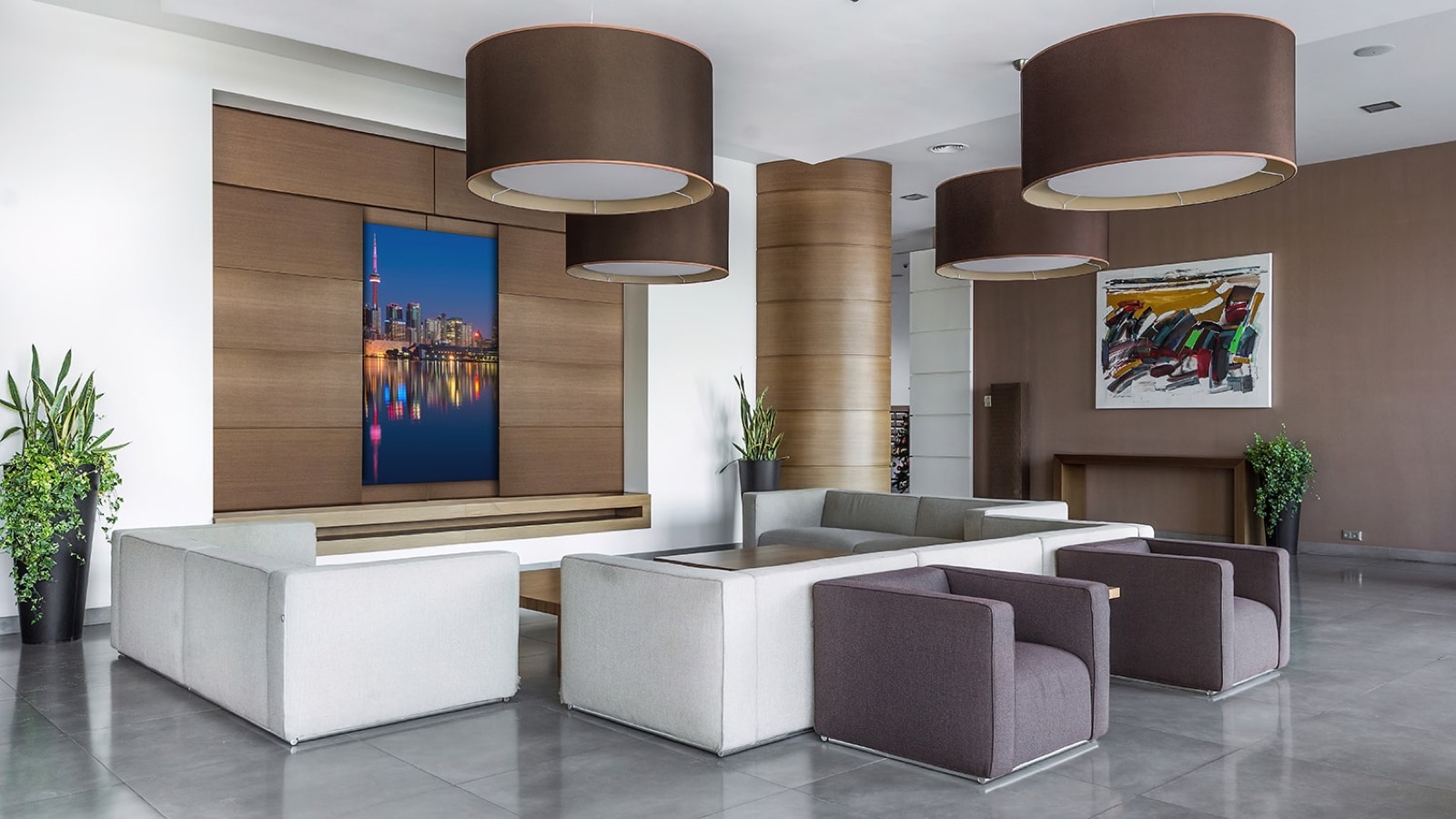
A 100-inch display is a commitment. Mounted the traditional way, it dominates a wall the way a garage door would, and in a home where every finish was chosen on purpose, that is usually a dealbreaker. The answer is not a smaller TV. It is a mechanism that makes the TV appear when you want it and vanish when you don’t. We install these systems, built on Future Automation mechanisms, in luxury homes across Miami and South Florida, and because Future Automation designs and manufactures in-house, its standard range can be customized around displays of exactly this scale.
Can a motorized wall mount hide a display this large?
Close to it, and with movement the fixed bracket can never offer. Future Automation’s HQA2 motorized mount handles 85-to-110-inch displays and rotates them in either direction, so one screen can serve a seating area, a dining table, and a kitchen island in an open plan. When the movie ends, it retracts to sit parallel to the wall like a conventional bracket.
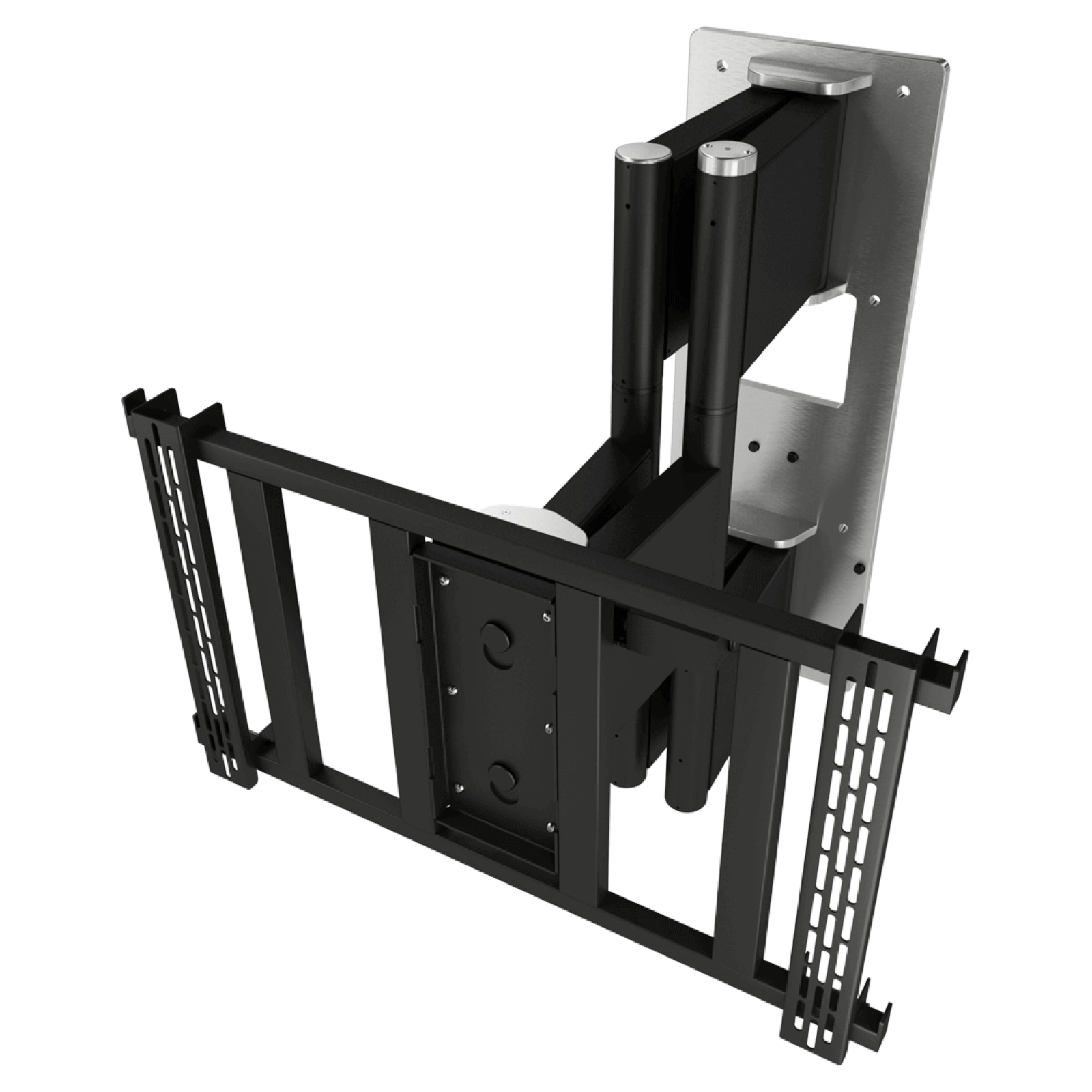
The HSE90 is the single-direction version: a heavy-duty motorized arm for displays from 70 inches up that swings the screen toward the room, ideal when the display lives in a corner and only ever needs to face one way.
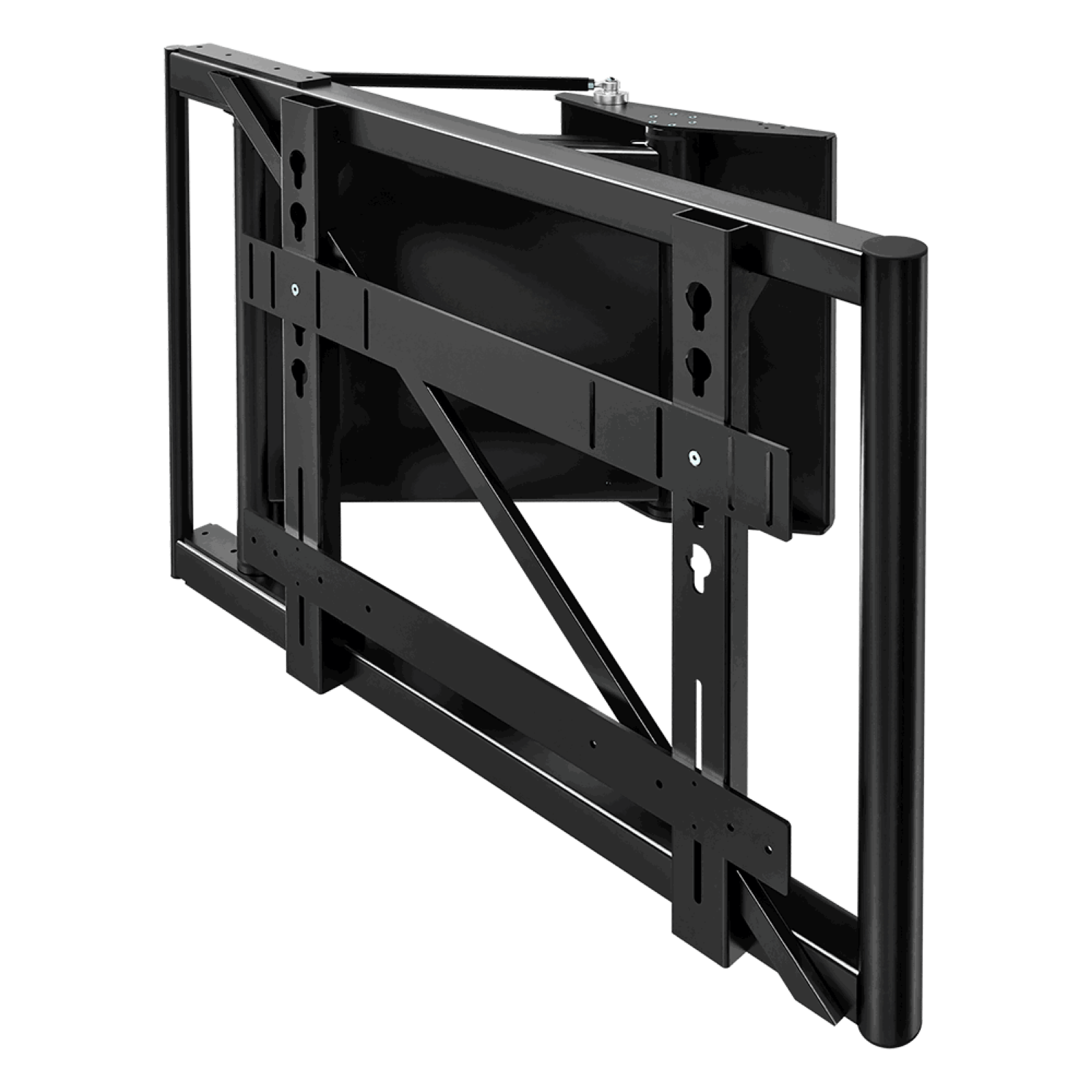
For a manual option, the PS80’s counterbalanced scissor arm is rated for 80-to-110-inch displays up to 265 pounds, yet moves with fingertip effort. It doubles as the service tech’s best friend: the display pulls away from the wall, so rear connections stay reachable without ever lifting the panel off. Paired with the WB80 in-wall box, the display sits nearly flush, with power and connectivity concealed behind it.
What about the ceiling?
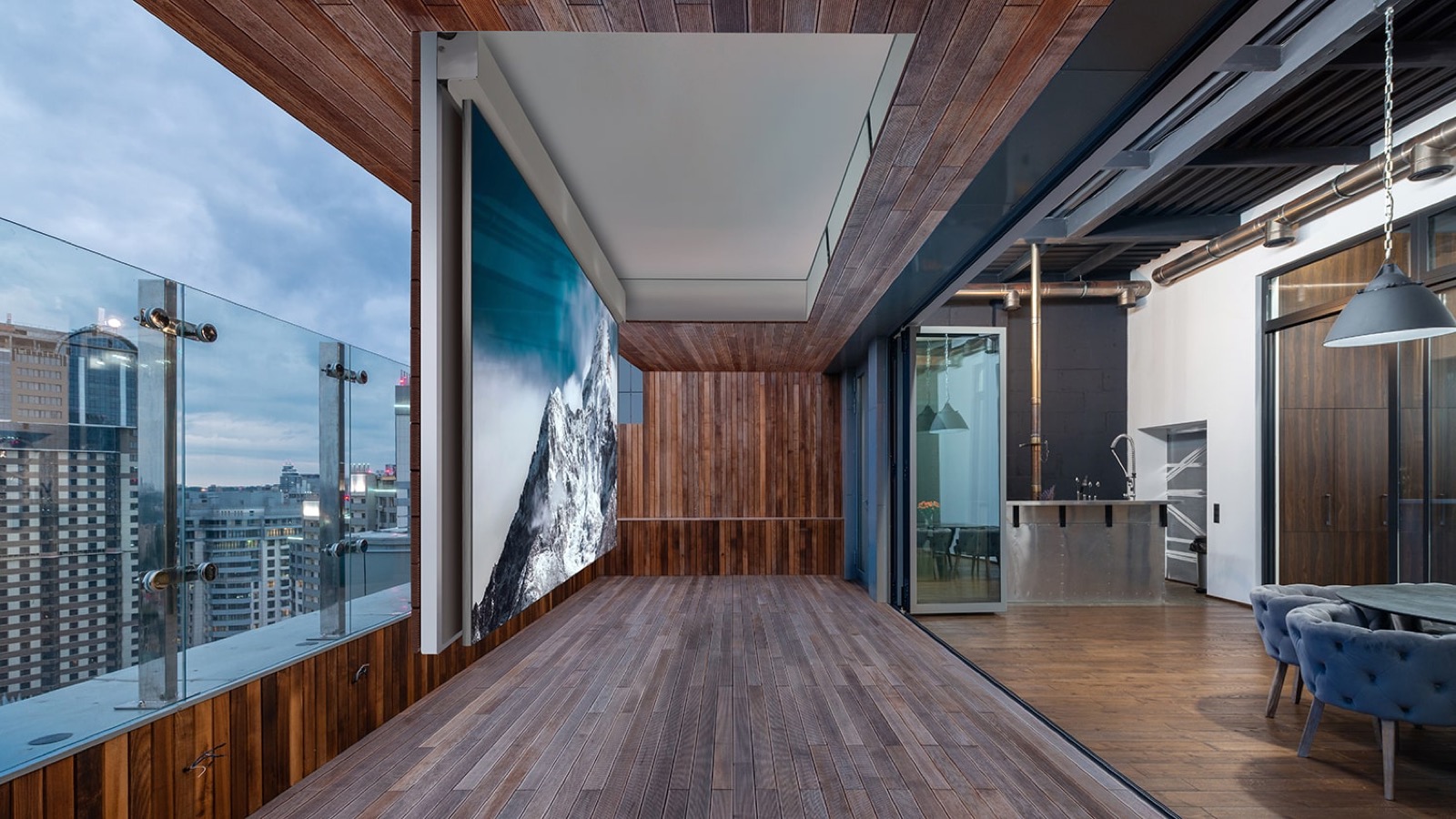
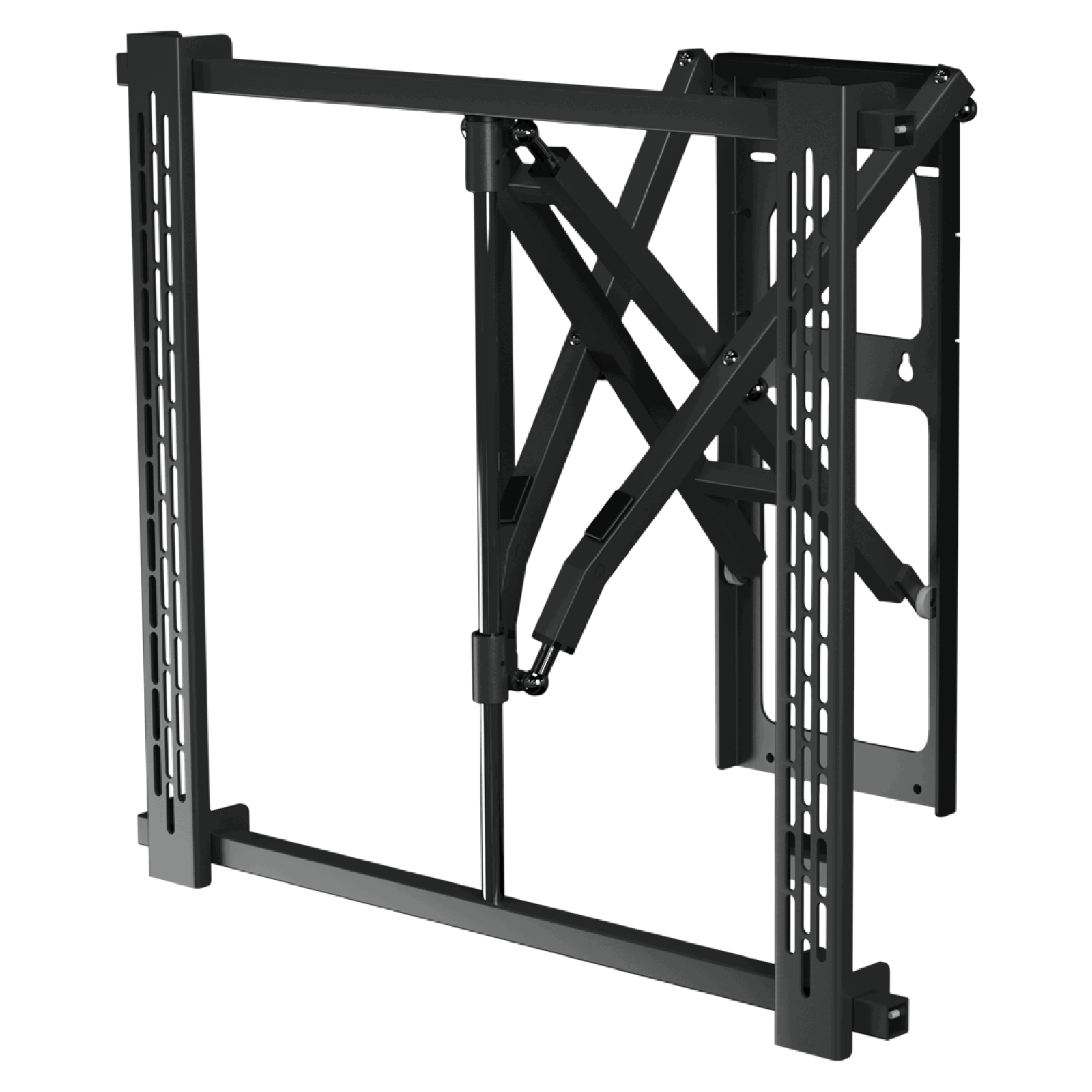
Ceiling space is the most underused real estate in a room, and a wall of glass leaves nowhere else to put a screen. Future Automation’s ceiling hinge range folds the display down from above, with telescopic-drop and swivel options so the screen can meet the right height and face any direction. The standard range covers displays into the mid-80-inch class; for the 100-inch class, Future Automation engineers customized heavy-duty versions like the one pictured here.
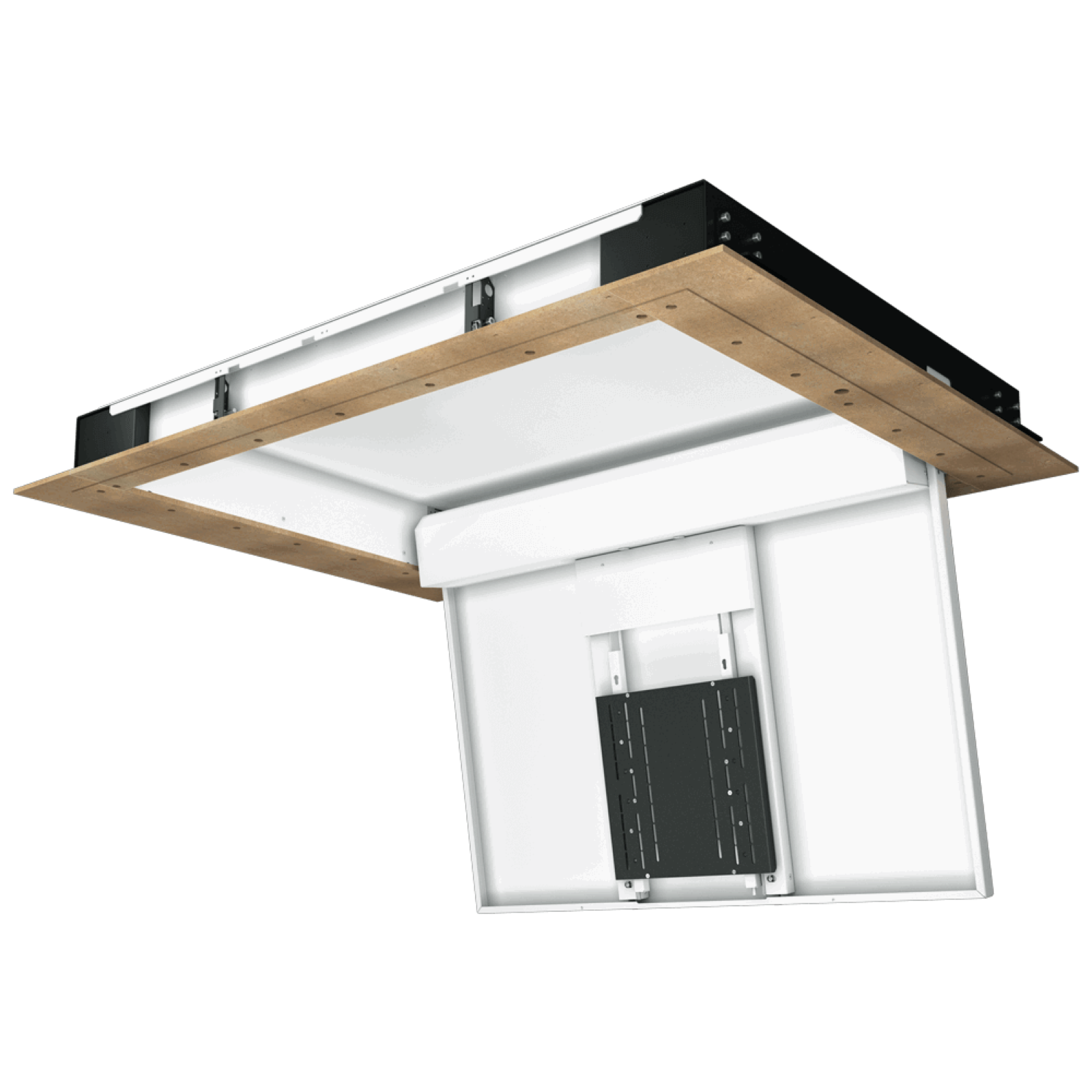
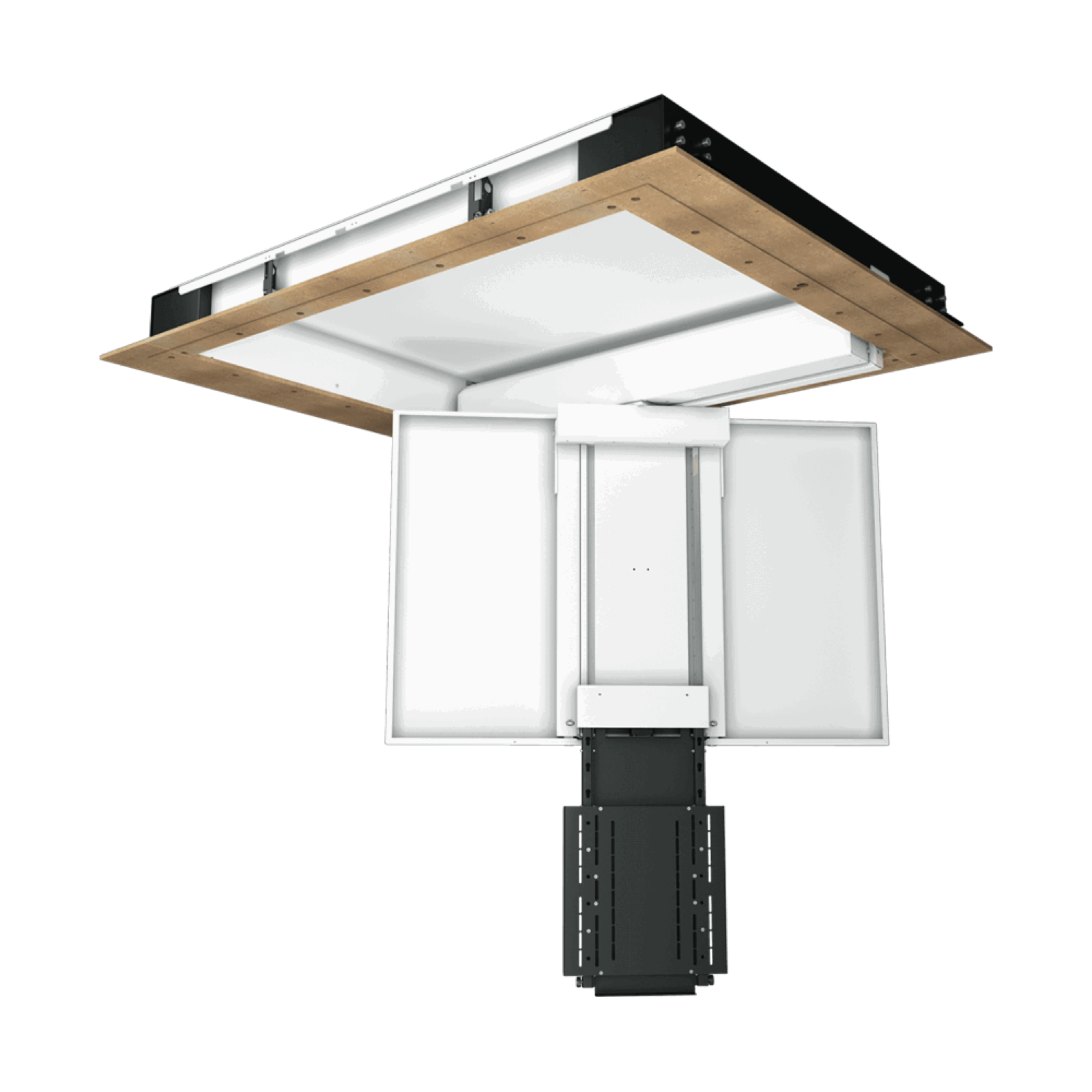
There is a marine range too, in stainless steel with locking mechanisms that secure the display while the vessel is underway, plus a fully weather-sealed outdoor model. On Miami waterfront projects and yachts, that is not a novelty; it is the spec.
Can a TV rise out of the floor?
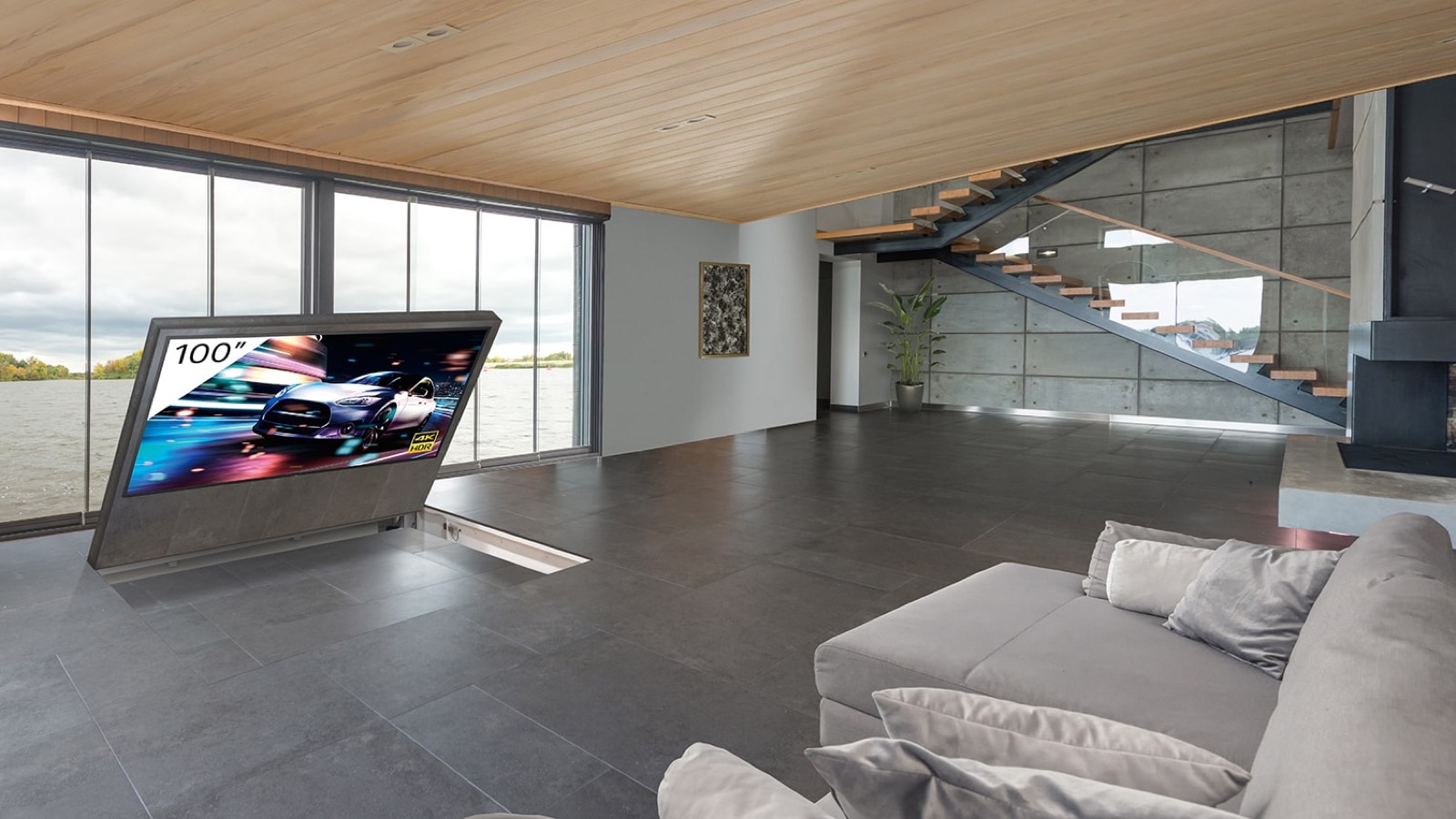
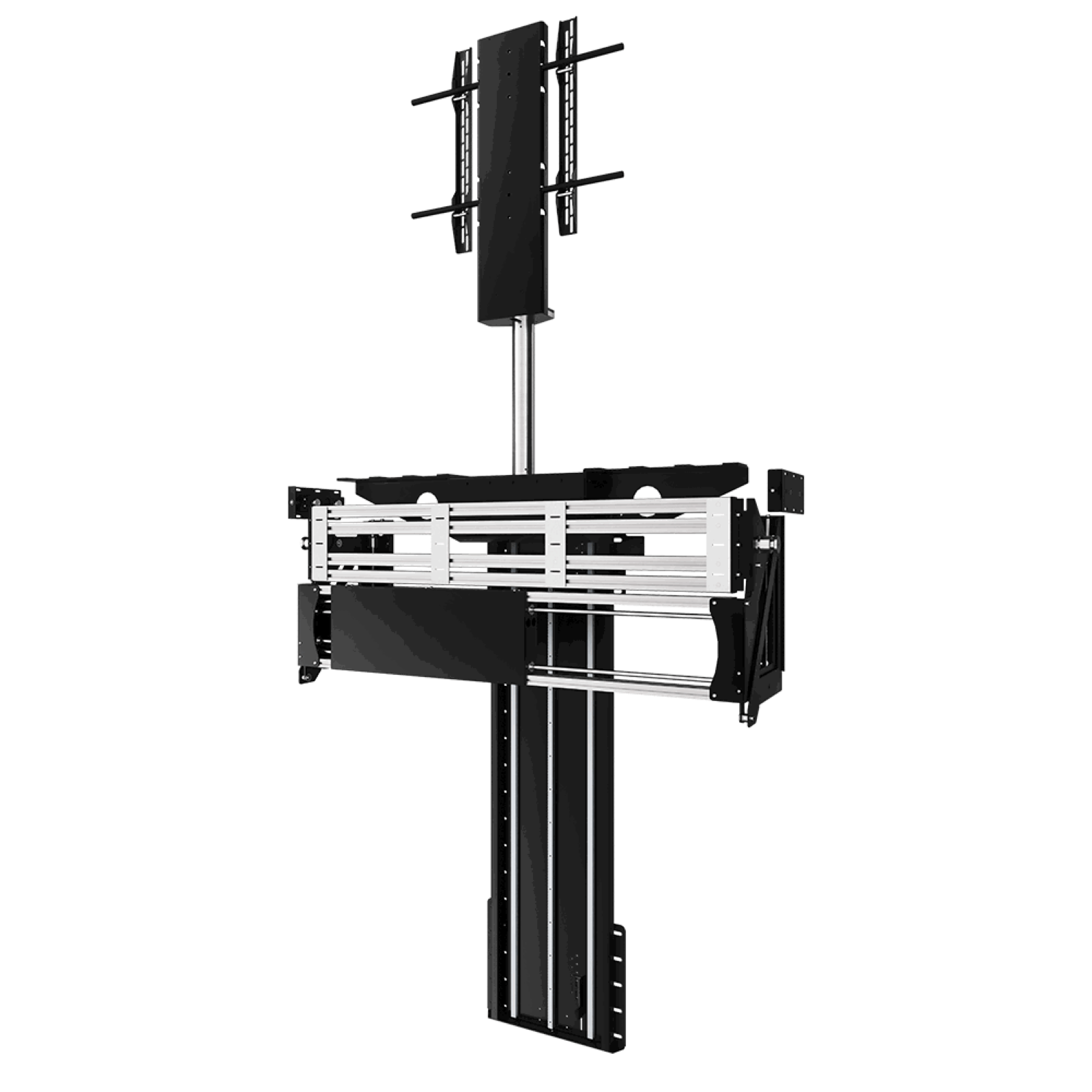
Yes, from a recess in the floor itself. Future Automation’s servo-driven lift system was re-engineered specifically to move 100-inch panels, with a drop-and-slide floor flap built to stay rigid across the wider opening. A swivel version rotates the raised display to face any part of the room, and a telescopic version carries it higher for taller sightlines. Floor lifts need structural depth below, so this is a decision we make with your architect early, not a retrofit.
How do cabinet lifts handle a screen this size?
By hiding it inside furniture that was designed around it. A customized version of Future Automation’s TSL lift keeps the mechanism height-efficient so the joinery stays furniture-scaled rather than becoming a monolith. The servo-driven SRV-LS, the fastest lift Future Automation has built, raises the display out of the cabinetry with an optional 180-degree programmable swivel.
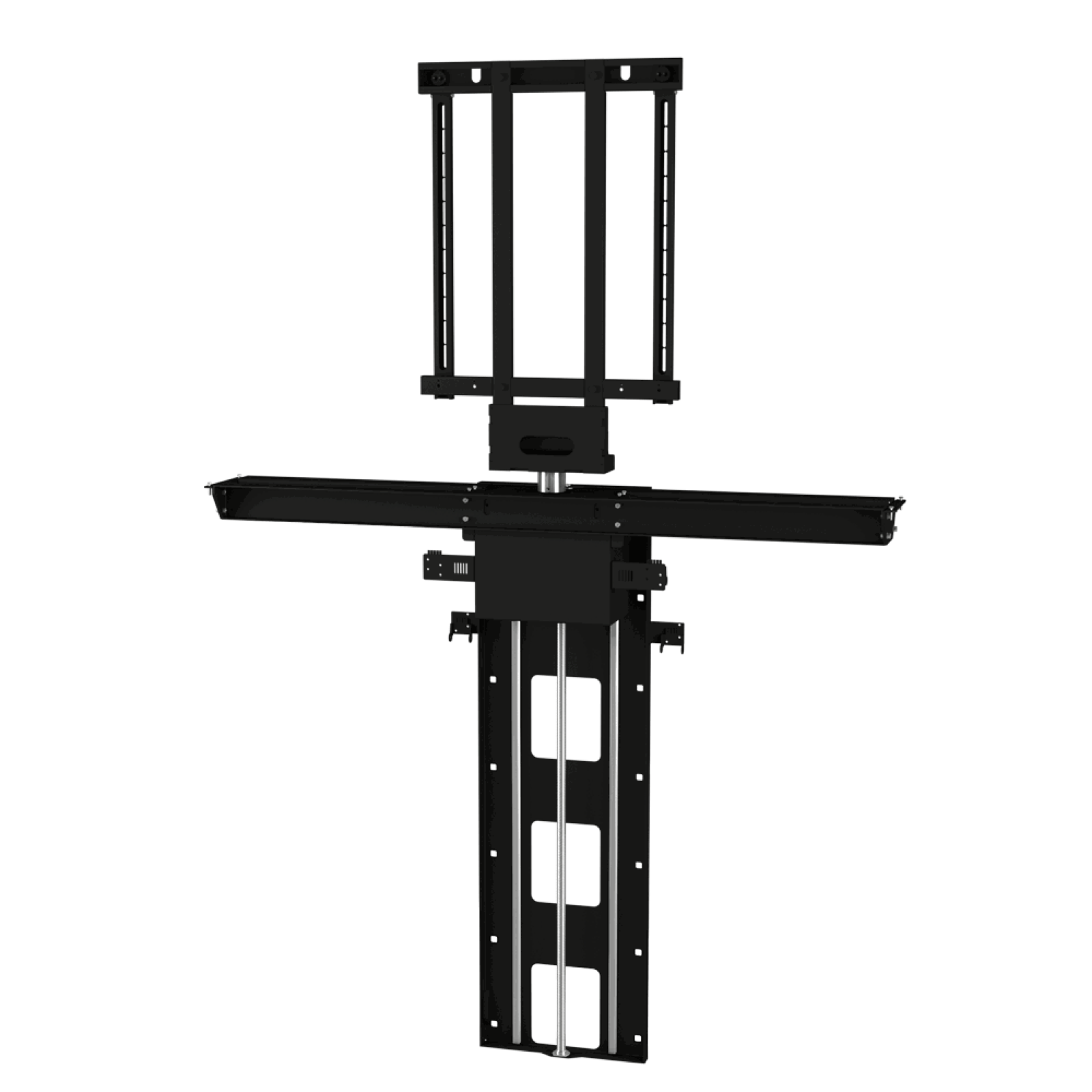
The freestanding SRV-SBL takes a different approach: a floating lid with a parallax scroll movement that reveals the display with less vertical travel, keeping the final viewing height lower than a conventional fixed-lid lift can manage.
What is a moving-panel mechanism?
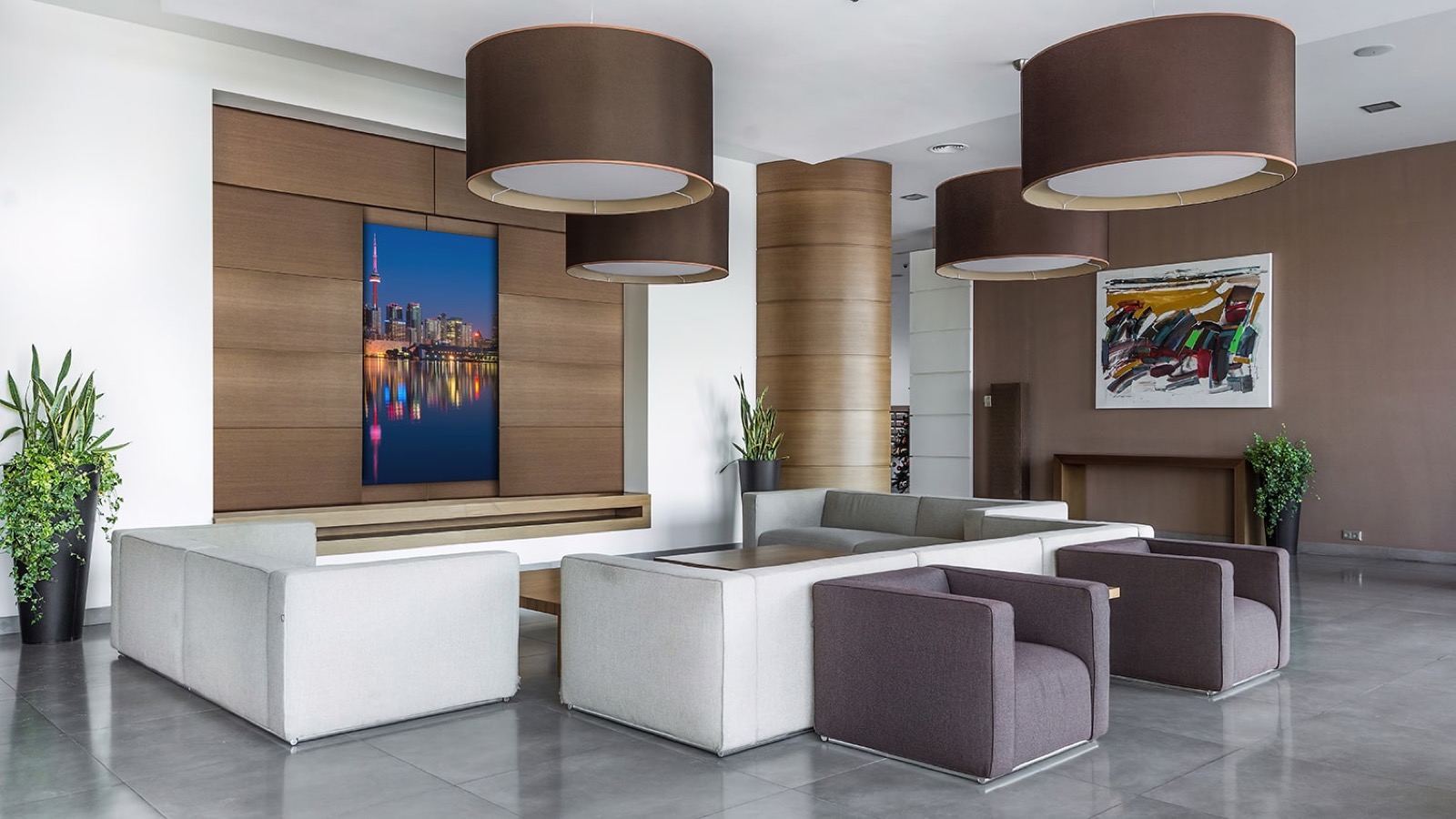
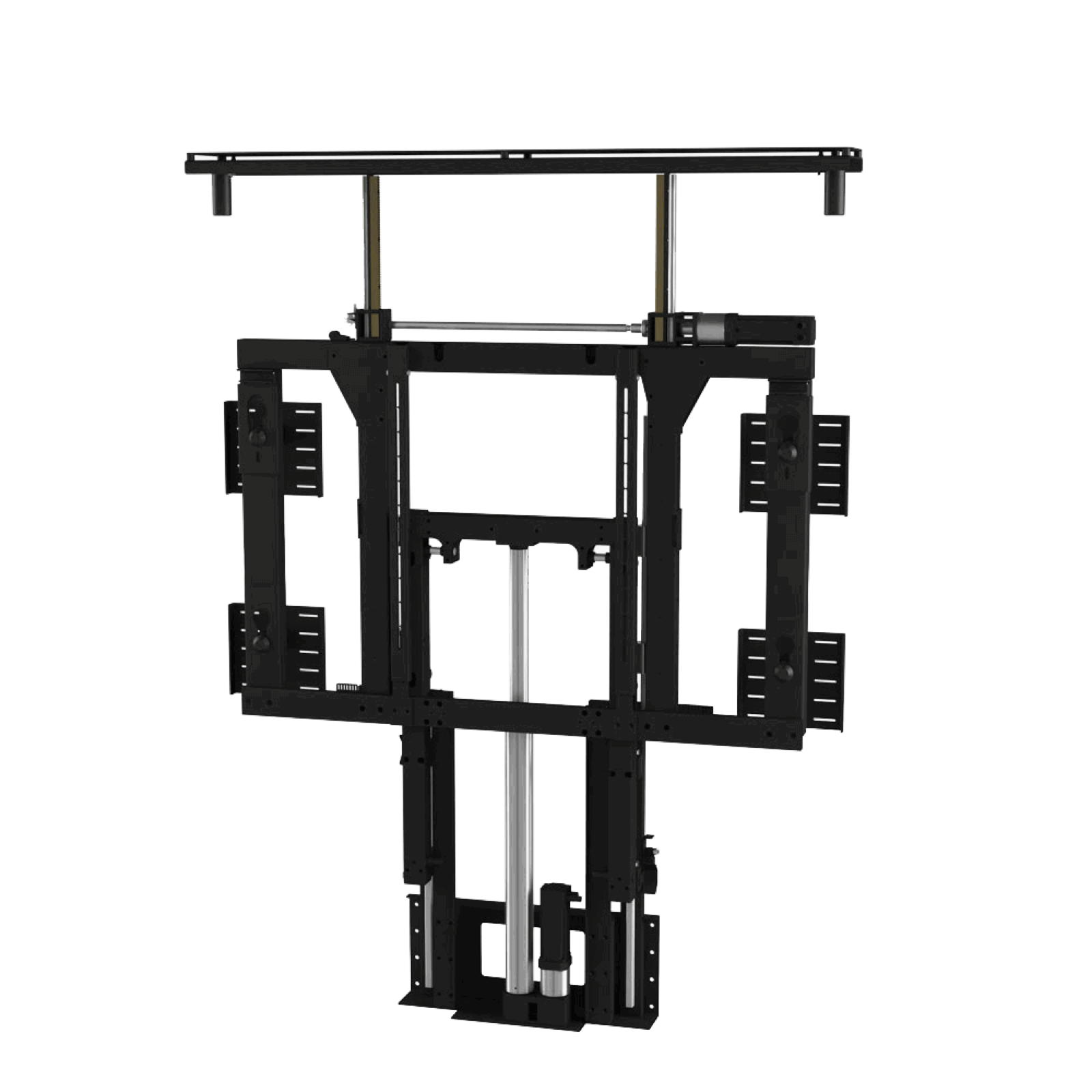
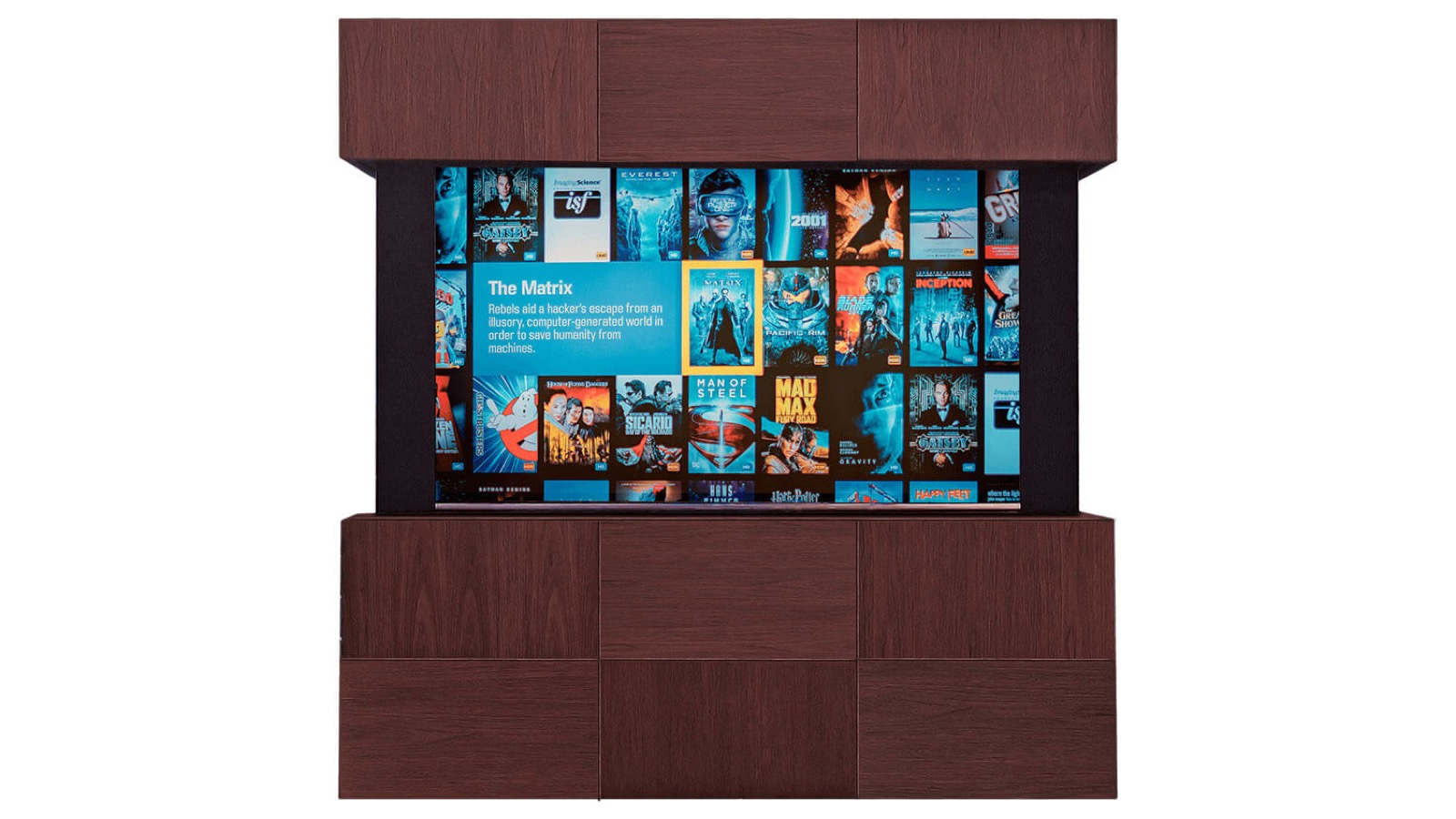
The most architectural answer of all: the wall itself moves. Future Automation’s MDM-SPLIT parts two finished panels in front of the display, faced in whatever material the room calls for, with the mechanism fully concealed within the wall or ceiling. Art, plaster, millwork; the screen simply is not there until it is.
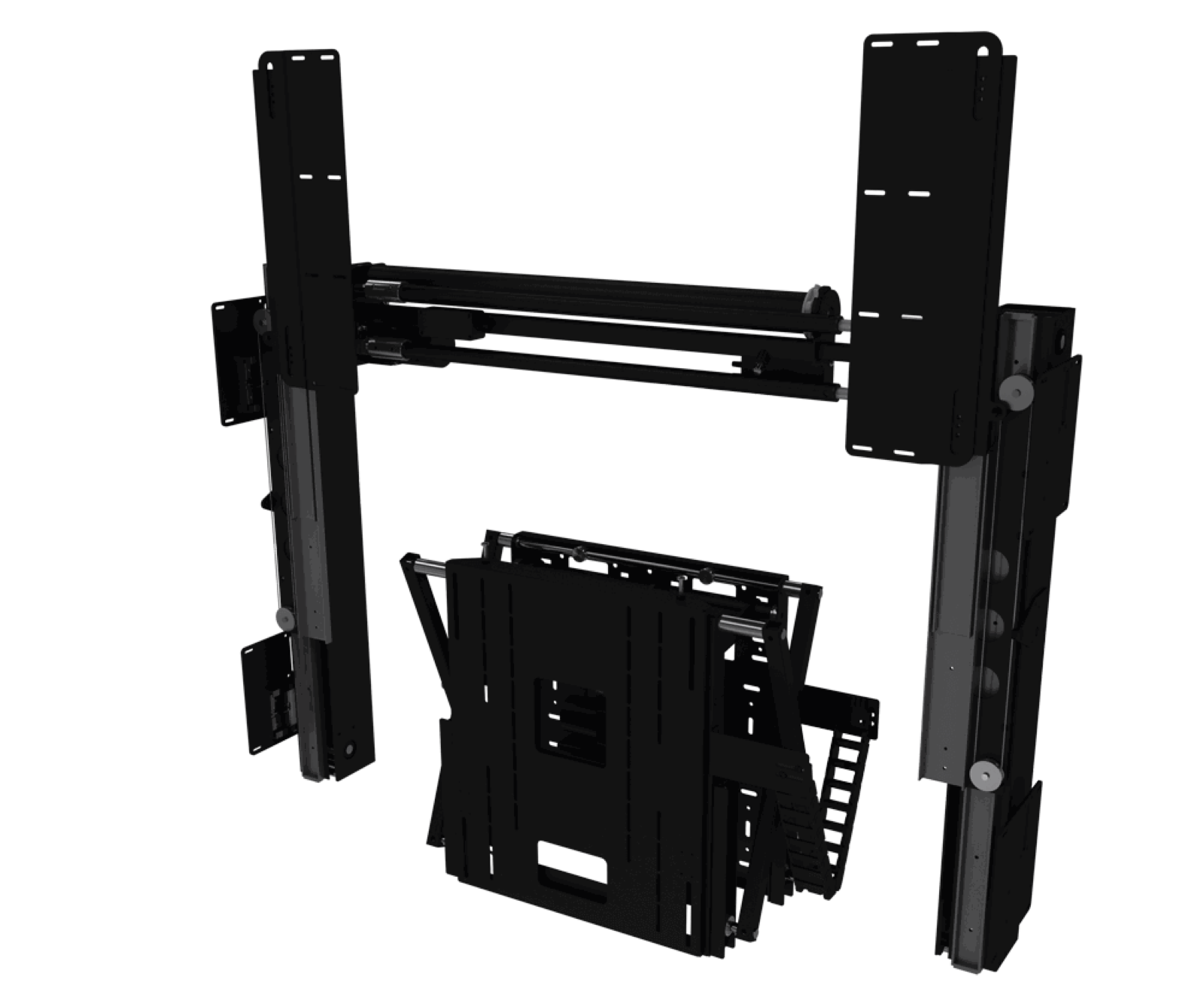
And for the full cinematic entrance, a bespoke retract-and-lift build known in the Future Automation workshop as the James Bond Lift pulls the display back, drops a panel over the opening, and leaves no trace. It also protects the display physically whenever it is hidden, which matters in second homes that sit empty for months.
Which solution is right for your home?
It depends on the room. Wall and panel mechanisms suit condos, where slab construction rules out floor recesses. Ceiling hinges rescue rooms with glass on every wall. Cabinet lifts belong where the furniture plan leads the design. The common thread is timing: every one of these is dramatically easier and cleaner to execute when the mechanism is in the drawings before the drywall goes up. That is where our whole-home AV design work starts, and the control system ties it together, so the same scene that dims the lights and lowers the shades brings the screen out of hiding.
Frequently asked questions
Can a 100-inch TV really be fully hidden?
Yes. Motorized mechanisms can conceal a 100-inch display inside a cabinet, above a ceiling, under the floor, or behind a moving wall panel, then reveal it on command. ioty, a home technology integrator based in Doral, Miami, designs and installs these systems with Future Automation mechanisms across South Florida.
What are the main ways to conceal a large TV?
Five families of mechanism: articulating wall mounts that sit nearly flush and swing out to the viewing angle, ceiling hinges that fold the display down from above, floor lifts that raise it out of a recess, cabinet lifts that rise out of furniture, and moving-panel systems that slide finished millwork in front of the screen.
Do concealment mechanisms work with displays this heavy?
Yes, with the right hardware. Future Automation’s PS80 articulating mount is rated for 80-to-110-inch displays up to 265 pounds, the motorized HQA2 covers 85-to-110-inch displays, and its servo-driven lifts were engineered specifically for the weight of 100-inch panels. Standard-range mechanisms can also be customized in-house for larger displays.
Can the TV still be serviced once it is concealed?
Yes. Articulating mounts pull away from the wall so the rear connections stay accessible without removing the display, and lift mechanisms present the display clear of the joinery. Service access is part of how we select the mechanism during design.
Is there an outdoor or marine version?
Yes. Future Automation builds marine versions of its ceiling hinges in stainless steel with locking mechanisms that secure the display while a vessel is underway, plus weather-sealed outdoor models. For Miami waterfront homes and yachts, we specify these alongside the interior systems.
Where can I see a hidden TV mechanism working in person?
In our Doral showroom, where concealment mechanisms run alongside lighting, shading, and whole-home AV in finished room settings. Appointments recommended.
The best screen in the house is the one you cannot find.
Planning a build or renovation with a display this size? Contact ioty and we’ll bring the mechanism into the drawings before the drywall closes.