

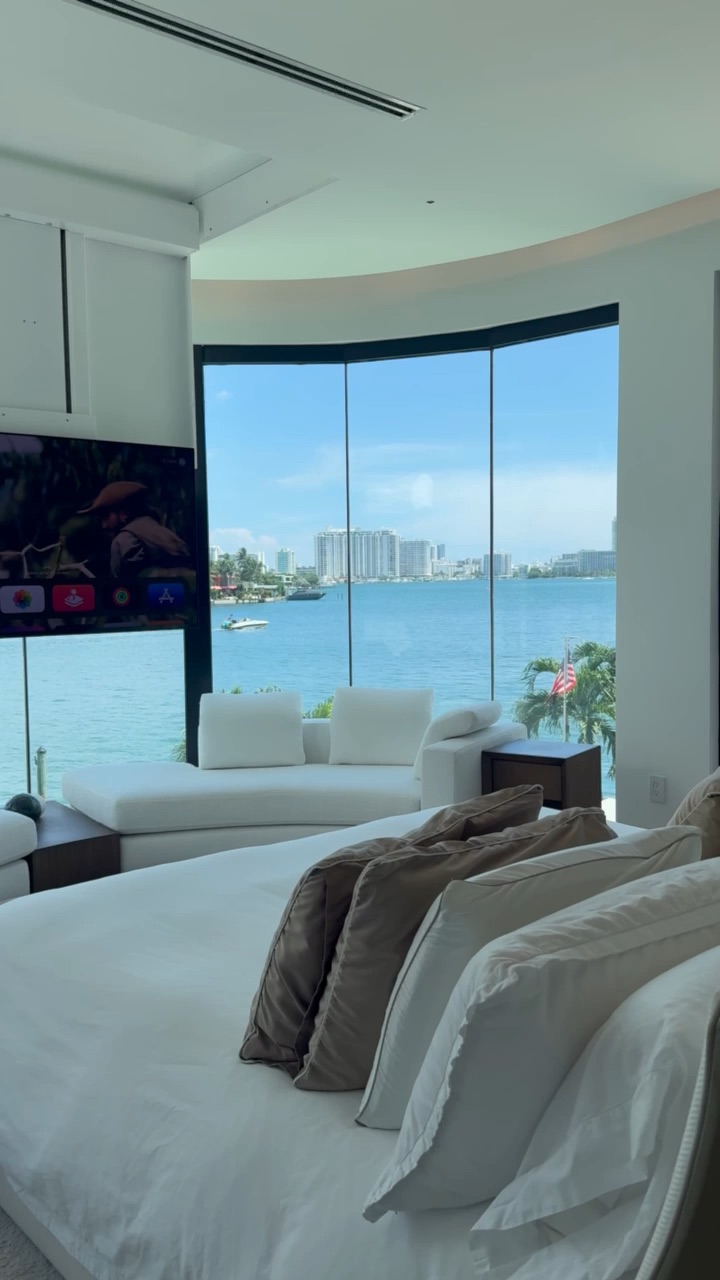
NOAA lowered its 2026 Atlantic outlook on August 6: seven to thirteen named storms, two to six hurricanes, and a 75 percent chance the season finishes below normal. El Niño turned up in the Pacific in June and should keep a lid on things. So far we have had Arthur and Bertha, and neither one became a hurricane.
Which makes this a good summer to get the house ready, because a quiet season is not the same thing as a quiet August. 1992 produced seven storms all year. The third was Andrew, which came ashore near Homestead at five in the morning on August 24 with sustained winds of 165 miles an hour. NOAA’s own account of that season puts it about as plainly as it can be put: “It only takes one storm to make a very bad season.”
Anyone who has been here a while knows that already. The more useful question is narrower. When the power goes, what in your house stops working, and in what order? Most Atlantic activity falls between mid-August and mid-October, and the season peaks around September 10, so there are a few weeks to work with. Here is what actually fails, starting with the part almost nobody protects.
What goes first: the shades
Shade motors and their hubs are almost never on backup power. They are not life safety, they are not the refrigerator, and when the panel schedule got written nobody argued for them. So the first thing a storm takes away is the ability to move fabric, which is the one thing you actually want to do before the wind arrives.
Position everything early. Roll interior shades up and retract exterior shades fully, while there is still power to do it. If the openings have hurricane shutters or accordion panels, the shades need to be clear of the track before anything closes, and the evening before landfall is a poor time to discover the clearance is tight. Wire-free shades running on their own batteries keep working through an outage, which is worth knowing if half the house is battery powered and half is wired to a hub.
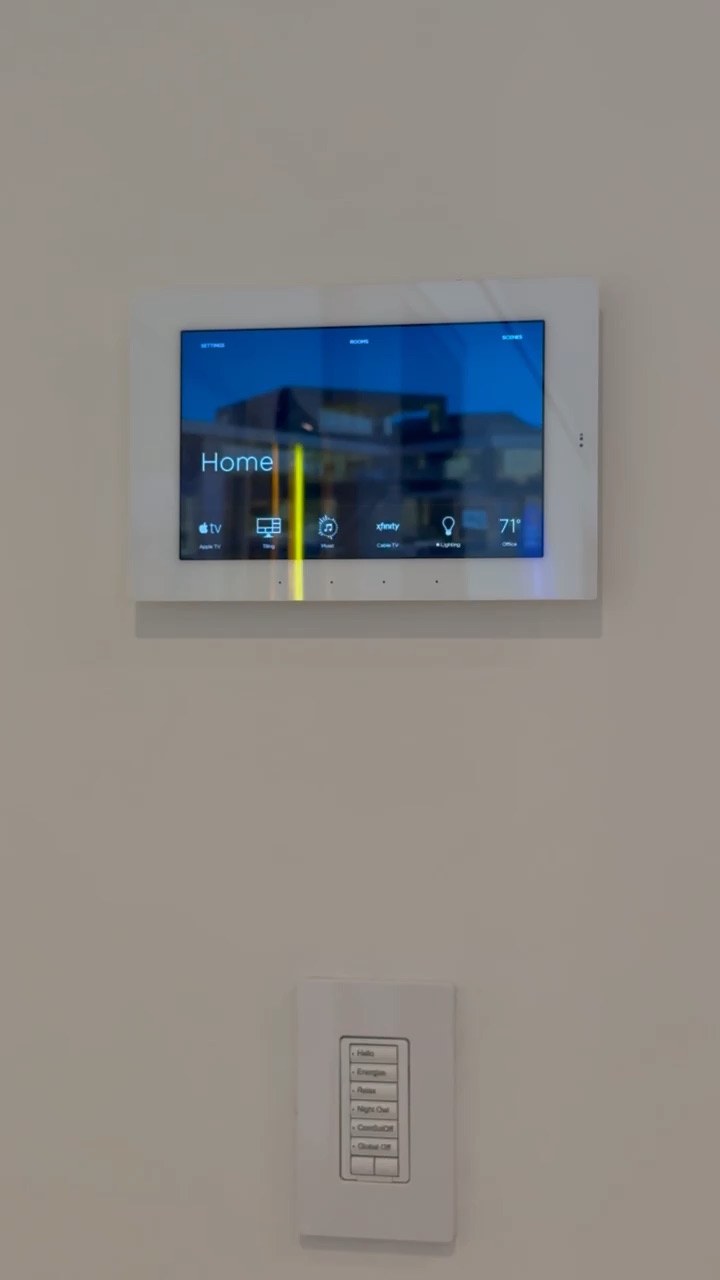
Then power down what does not need to stay live: shade hubs, amplifiers, sources, projectors. One scene handles the whole sequence. We build a storm scene for clients who want it, so preparing the house takes ten seconds from a keypad or a phone instead of twenty minutes of walking around unplugging things.
There is a longer-term fix worth raising with your electrician. 360 Power Quality, whose voltage-regulating UPS we cover below, recommends running one unit for AV, IT and security and a second for lighting and shade, so the two families of equipment stay isolated from each other. Put the shade system behind protected power and it stops being the first casualty.
Where the damage actually comes from
A direct lightning strike makes a better story than it does a statistic. The common killer is voltage. The grid sags, recovers, sags again, and repeats that cycle for hours while crews work the neighborhood. Switch-mode power supplies inside amplifiers, video processors, network switches and control hosts tolerate a great deal of that, right up until they stop, and the failure often surfaces days later as a device that boots into nothing.
An online double-conversion UPS removes the problem by design. It takes whatever the grid offers, converts it to DC, and regenerates clean AC from scratch, so connected equipment never touches utility power directly. For whole-system protection we specify 360 Power Quality’s Titanium Series TI-H100-50R, a hardwired 10 kVA / 10 kW unit that takes 240V single phase in and delivers both 240V and 120V out. It holds voltage within 1 percent around the clock, which makes it a full-time regulator rather than a device that only matters during an outage.
Two details matter more than the headline rating. The Titanium carries a built-in isolation transformer that establishes a neutral-ground bond downstream of the main panel, and that drops the noise floor on everything behind it, which is audible on a good system. And it supplies 125 amps of inrush at 120V for 100 milliseconds, so large amplifiers can sit behind it without tripping it on transients. An SNMP card comes standard, so we can watch it remotely.
Runtime deserves an honest conversation. The internal batteries hold a 1 kW load for 79 minutes, 2.5 kW for 25 minutes, and a full 10 kW for about 2 minutes. That is sized to ride out flickers, to keep the house alive while a generator starts, and to shut equipment down gracefully. Extended battery cabinets take full-load runtime to 8, 16 or 24 hours when the goal is genuinely riding out a storm.
Which circuits are actually on the generator?
Standby generators get sized around air conditioning, the kitchen, pumps and lighting. The equipment rack and the structured wiring closet are frequently left off the schedule. That is how a house with a whole-home generator ends up with working lights and no internet, no cameras and no control system.
Pull the panel schedule now and find out which side of the transfer switch the rack sits on. If moving those circuits is impractical, battery at the rack plus a generator-backed wiring closet covers most of the gap.
What happens to the cameras
Cameras fail in two independent ways, and most homes are exposed to both. They stop when the switch that powers them loses power, and separately, cameras that record to the cloud stop retaining anything the moment the internet drops. Losing footage during the one event you would want it for is a bad surprise.
Two fixes, both undramatic. Put the cameras, the switch feeding them and the recorder on backup power so they survive the outage. Then record locally to an NVR, so footage lands on a drive in the house and uploads later when the connection returns.
The network is usually the last thing standing
In a well-built system the network outlives everything else in the house, because it is small, it sips power, and it is the one load that tends to get put on battery. That is the right instinct. Keep it that way, because when the network survives, the alarm keeps reporting, the cameras keep recording, and we can see the system from our office instead of guessing.
Give it a second path out as well. Cellular failover at the router, or a satellite link the network can switch to automatically, keeps the house reachable when the neighborhood loses service. Heavy rain degrades satellite, so treat it as a backup rather than a replacement. Even a degraded link carries cameras and a remote support session.
The day the power comes back
Restoration is often harder on equipment than the outage. Utilities bring circuits back in stages, and those first minutes can swing badly. Leave the rack off until voltage looks steady, then power up in order: network first, then the control processor, then sources and amplifiers. Gear that all wakes at once tends to come up arguing over IP addresses, which turns a clean restart into an afternoon of troubleshooting.
Racks with network-monitored power can be sequenced from our office. In the week after a storm, when roads are a mess and every client needs something, remote power cycling is the difference between a fix that afternoon and a truck the following week.
What we handle before the season peaks
For clients on a Silver or Gold Client Care plan, we monitor systems remotely, which usually means we see a device drop before anyone at the house does. Ahead of the peak we check UPS batteries, confirm what is on backup power and what is not, verify cameras are recording locally, and build the storm scene. Service requests go through our support page, and a real person answers the phone at 305-507-7402.
Frequently asked questions
Should I unplug my smart home system during a hurricane?
Power down and unplug what does not need to stay live, including shade hubs, amplifiers and sources. Leave the network, cameras and alarm powered, ideally on battery backup, so the house keeps reporting. ioty, a home technology integrator based in Doral, Miami, builds a storm scene for clients that puts the system into this state in one press.
Will my security cameras keep recording during a power outage?
Only if the cameras, the switch that powers them and the recorder are all on backup power. Cameras that record to the cloud also stop the moment the internet drops, so local recording on an NVR is what keeps footage during an outage.
What size UPS does a home system need?
It depends on the load, and the goal shapes the answer. For whole-system protection, a hardwired 10 kVA / 10 kW online unit such as 360 Power Quality’s Titanium Series TI-H100-50R regulates voltage to within 1 percent and includes an isolation transformer. Its internal batteries hold a 1 kW load for 79 minutes and a full 10 kW load for about 2 minutes, and extended battery cabinets take full-load runtime to 8, 16 or 24 hours.
Should my equipment rack be on the generator?
The network and the equipment rack are often left off a standby generator schedule that was sized around air conditioning, the kitchen and lighting. Check the panel schedule before the season so you know which side of the transfer switch the rack sits on, and add battery at the rack if moving the circuits is impractical.
What is the safest way to bring a system back after the power returns?
Wait for the voltage to settle before energizing the rack, then power up in order: network first, then the control processor, then sources and amplifiers. Racks with network-monitored power can be sequenced remotely, which avoids a service visit during the week when everyone needs one.
When is the peak of the Atlantic hurricane season?
The Atlantic season runs June 1 to November 30, most activity falls between mid-August and mid-October, and the climatological peak is September 10, according to the National Hurricane Center.
Want your system checked before the peak? Contact ioty and we will walk the rack, the backup circuits and the cameras with you. For a deeper look at Savant Power Storage, RoseWater Energy, and how battery, generator, and network backup integrate into one system, read our guide to storm-ready smart home design.